
List the jobs the surface must do
Count the people and list the things that need space: individual place settings, serving dishes, drinks and any shared items. Then decide what must stay on the table throughout the meal. A vase that fits before the food arrives may occupy the only useful place for a serving bowl.
Separate the eating surface from possible staging surfaces. A nearby side table or counter may hold items that do not need to be within reach for the entire meal. Keep that choice practical for your actual room and the way people move through it.
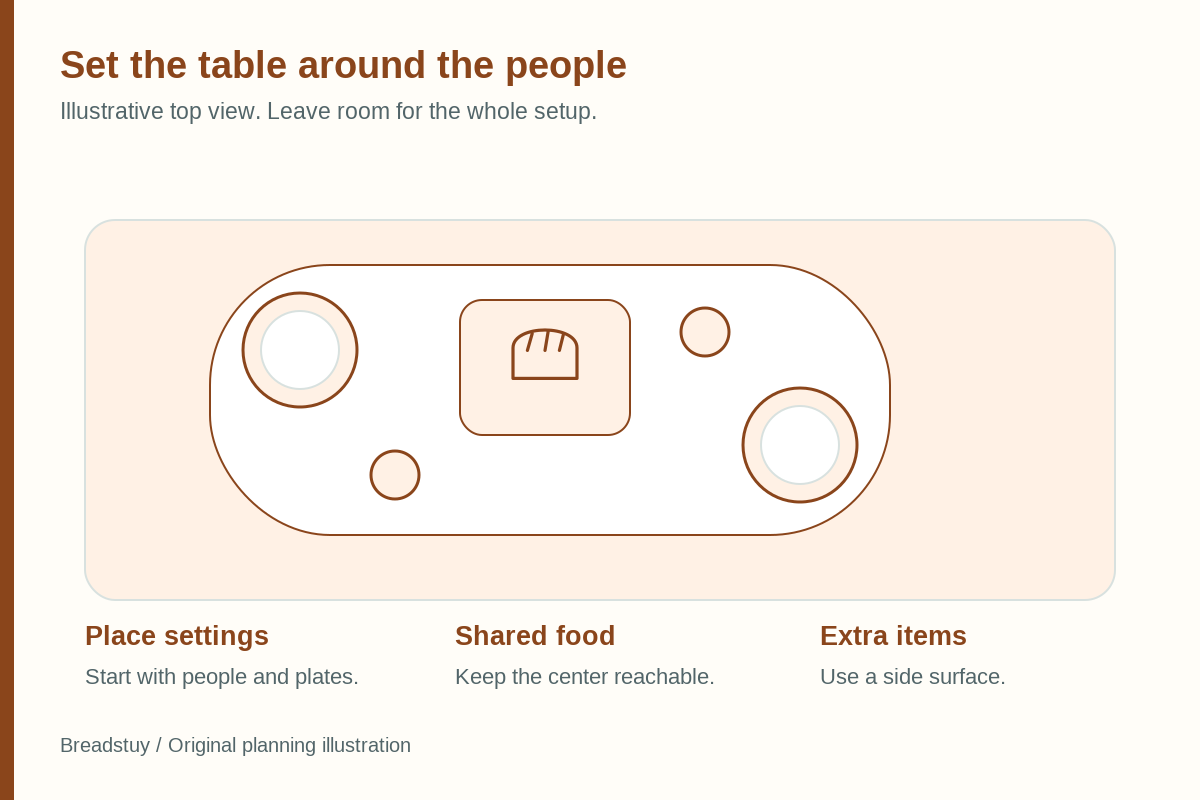
Rehearse with the real dishes
Lay out the plates, cups, cutlery and empty serving pieces before the day. This reveals problems that a seating count alone misses: handles overlap, a bowl blocks a glass, or the central dish can only be reached by moving another item.
If you are considering an extending table, check the manufacturer’s instructions and the fully opened footprint. IKEA’s small-space dining guidance illustrates extending and drop-leaf arrangements, but an example room does not establish that the same arrangement fits yours. Test chair movement and access in the actual space.
Choose a serving arrangement
Compare three options using the same dishes. With all food on the table, everything is nearby but the center fills quickly. With a separate serving surface, the table stays clearer but people need an accessible route to it. Serving in stages uses fewer pieces at once but requires more hosting attention.
These are layout choices, not food-holding instructions. Follow appropriate food-handling guidance for the menu you choose; this worksheet only assigns space and tasks. You can mix arrangements, such as drinks on a side surface and one shared dish on the table.
Write a short reset plan
Make a list of what goes where before guests arrive and where used serving pieces will go afterward. Keep the route to that destination usable. Remove decorative extras before removing the room needed to eat comfortably.
After the rehearsal, note one adjustment that makes the biggest difference. It may be using a smaller serving dish you already own, moving a drink tray or bringing out a second course later. Buy additional organizers only if the trial shows a specific unsolved problem.
Brunch surface plan
| Item / task | During arrival | During the meal | After use |
|---|---|---|---|
| Individual place settings | Table | Table | Chosen clearing area |
| Main serving dish | Preparation area | Table or serving surface | Chosen clearing area |
| Drinks | Chosen accessible surface | Keep the route usable | Reset or clear |
| Decorative items | Only if space remains | Move if they obstruct use | Return to normal storage |
Put the plan to work
Use your own information to make a practical next step.
Open the planning worksheetSources and review
These sources support the factual details in this guide. Policies, prices and services can change; check the official source before acting.
- IKEA: extending a small dining setupChecked November 24, 2026
An original planning resource. Sources identify the factual references used; examples and worksheets are our own.
How these guides are prepared